

Introduction
Looking for a job can feel like walking a tightrope. You want to show confidence without coming off as arrogant. You aim to be authentic without oversharing. And, most importantly, you need to communicate in a way that leaves no room for misinterpretation. Why? Because trust is the currency of job hunting. Without it, your application gets ignored, your interviews feel cold, and your offers vanish.
In today’s hiring environment, the margin for misunderstanding is small. Employers get dozens—or hundreds—of applicants for each role. The clearer and more credible you appear, the better your chances of standing out.
So, how can you build that trust while avoiding being misunderstood? Let’s break it down.
Why Trust Matters More Than Ever
Job seekers often assume that skills alone will carry them through. But the truth? Hiring decisions are rarely based solely on qualifications. Employers are looking for someone they believe will follow through, fit the team, and be upfront about their abilities.
According to Checkr, 67% of job seekers believe employers aren’t transparent about hiring intentions. On the flip side, 47% say they’d take lower pay if treated with respect and given clear communication. That’s how much trust—and perception—matters.
If you want hiring managers to believe in you, you need to:
-
- Present accurate information in your resume and interviews.
- Communicate in a way that reduces ambiguity.
- Manage both in-person and digital impressions.
Clear Communication Starts Before the Interview
Your Resume as Your First Promise
Your resume is often the first handshake—only it’s on paper (or a PDF). Every claim you make sets an expectation. Embellish too much and you risk breaking trust before you even get to the interview.
-
-
- Use precise dates and job titles.
- Highlight measurable achievements where possible.
- Avoid vague skill claims like “great leader” without proof.
-
Example: Instead of “Managed a team,” write “Led a team of 6 customer service representatives, improving response times by 18% over six months.”
Cover Letters That Actually Connect
A cover letter isn’t a place for recycled phrases. Employers can spot generic writing instantly. Instead, share a short, relevant story that links your past experience to the company’s needs.
Digital Applications: Managing Perception Online
Many job seekers underestimate how much their online behavior affects hiring decisions. The University of Michigan found that online platforms can lead to better job matches, especially for higher-income seekers who use them strategically. But lower-income applicants sometimes face access issues, resulting in fewer callbacks.
So, while your resume matters, your digital presence can be equally influential.
Tips for clarity online:
-
-
- Keep your LinkedIn profile consistent with your resume.
- Avoid jargon-heavy headlines—make it clear what you do.
- Update profile photos to be professional yet approachable.
-
What the Data Says
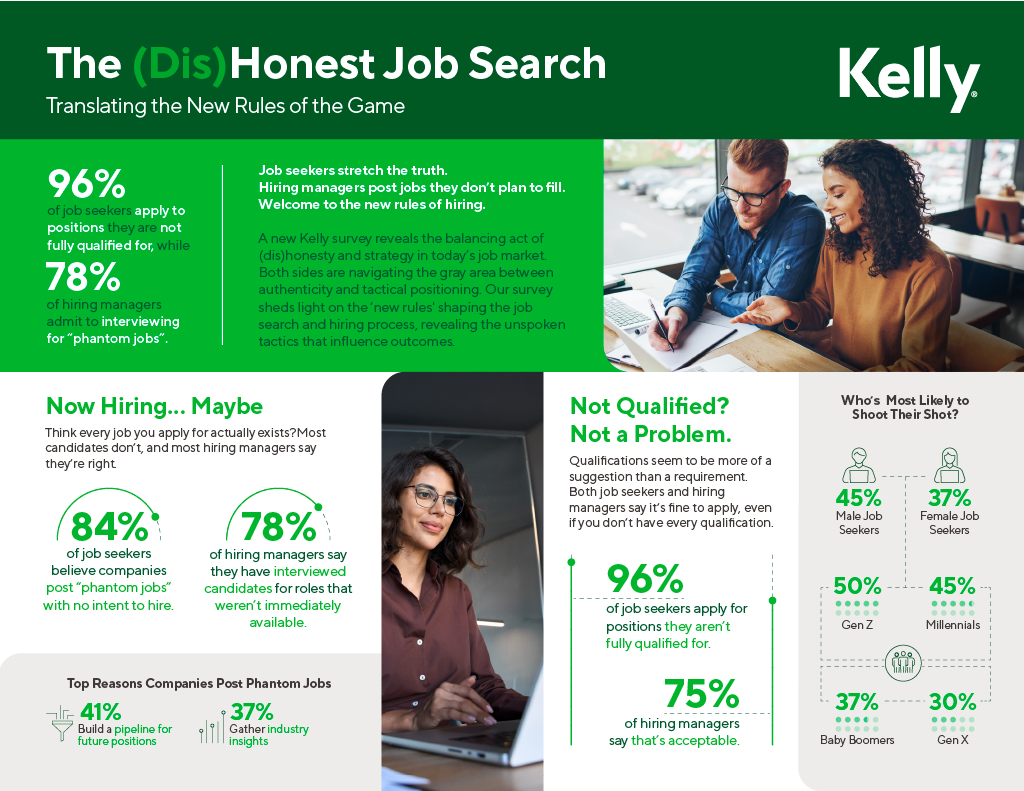
The numbers paint a clear picture: dishonesty—even small exaggerations—can backfire. Hiring managers are looking for consistency between what’s on your application, what you say in interviews, and what they find online.
Building Trust in the Interview Room
1. Show, Don’t Just Tell
Anyone can say they’re reliable or collaborative. Back it up with examples.
Weak: “I’m a team player.”
Stronger: “In my last role, I coordinated a cross-department project involving 12 people, and we delivered ahead of schedule.”
2. Listen as Much as You Speak
Active listening builds credibility fast. Repeat back key points to confirm you’ve understood. This not only avoids misinterpretation but also shows respect for the interviewer.
3. Be Honest About What You Don’t Know
If you don’t know the answer, acknowledge it and express your willingness to learn. Candidates often fear this makes them look weak. In reality, it signals self-awareness and authenticity.
The Role of Expectations & Perceptions
The NBER notes that beliefs about job prospects can actually influence outcomes. Overconfidence can lead to poor preparation, while underestimating your chances can cause you to self-sabotage.
Similarly, Armstrong & Metaxa found that trust in the hiring process changes based on automation levels, with referrals and household income being major predictors of success. Many young applicants distrust automated tools, which makes personal recommendations even more valuable.
Avoiding Misinterpretation in Digital & AI-Driven Hiring
With many companies using AI screening tools, even well-qualified applicants can get filtered out. Here’s how to avoid misunderstandings:
-
-
- Use exact keywords from the job posting—but only if they truly apply to you.
- Keep formatting simple so resume scanners can parse your details.
- Mention referrals when possible—these remain a strong predictor of success.
-
Job Search Burnout & How It Affects Communication
The Job Seeker Nation Report reveals that 66% of job seekers feel burned out. Burnout can lead to rushed applications, curt emails, and poor interview performance—all of which can cause misunderstandings.
To protect your clarity:
-
-
- Set a daily application limit.
- Take short breaks before important calls.
- Draft messages, then review them later with fresh eyes.
-
Conclusion
Building trust in your job search isn’t about putting on a perfect act. It’s about showing up with consistency, honesty, and clarity—in your resume, online profiles, and interviews.
The job market is competitive, but trust and clear communication can set you apart. Be specific in your claims. Stay authentic in your tone. And remember—every interaction is part of your professional reputation.
If you can do that, you’re not just applying for jobs. You’re giving employers a reason to believe in you.